


.png)
TL/DR
- In 2009, Airbnb struggled to get renters
- The founders tried user testing. They visited properties of underperforming hosts, observing them use their website and having conversations with them
- They noticed that underperforming properties were often photographed poorly
- They learned that people wanted to rent entire apartments
- They observed that hosts struggled to price their listings effectively
- These learnings led to a free photography service for hosts, the option to rent out entire properties, and a predictive pricing algorithm
Introduction
Two years ago, I had an incredible experience. I planned a graduation trip with my safety-conscious friend.
“We can’t book over call. What if they deny that we ever called…? Then, we will be at the police station, and….”
“We can’t pay on arrival. What if our cards don’t work? And the internet is spotty anyway. Then, we will be at the police station, and…”
“When hikers ask, we are 28 year-olds analysts on a work trip. Our colleagues are catching up behind us.”
(We got the response “Is your company just 4 people? I saw you get out of the hotel. The place you are staying at has a capacity for 6….and the other two are my friends…”)
Needless to say, staying at an Airbnb was out of the question.
“What if the hosts overstep, who will protect us…?”
“What if they don’t step up at all, who will protect us…?”
“What if they step on us in our sleep at night, who will protect us…?”
We had all these questions. This is what finally won us over:
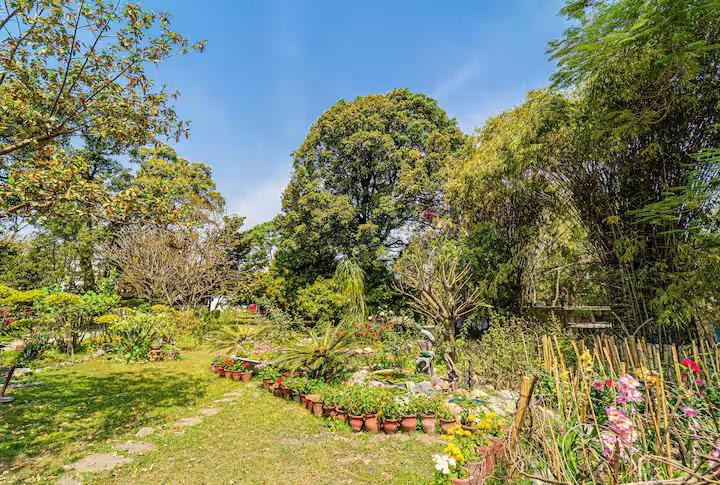
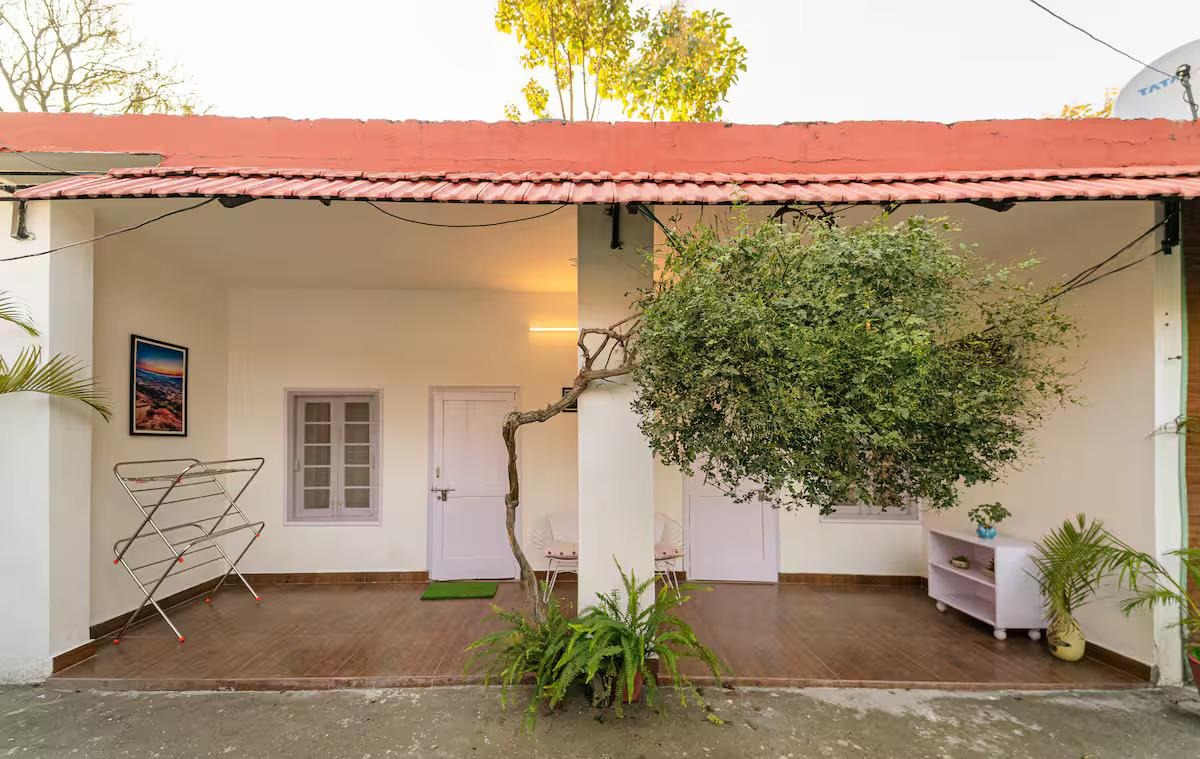
Making my Case - Pictures of the Laidback Outhouse in Dalanwala
We ended up staying at the Laidback Outhouse in Dalanwala against all budgetary and Airbnb concerns. “Yes, but LOOK AT THE PHOTOS” became a common refrain. It ended up being an extremely comfortable experience.
Was it the “rational” choice? Economists would say, “no”. We just needed a bathroom and a bed to sleep in. And there was a room available for less than a ⅓ of the cost closer to the city centre.
We were thorough decision makers. We invented a rating scale, a ranking system and new voting mechanisms to break ties between 4 people. Who would have thought a bunch of photographs would win us over? It appears that Airbnb’s user research from many years ago pinned us down accurately.
The user research
In 2009, Airbnb struggled to get renters. Even more than they do today. The founders of Airbnb - Brian Chesky and Joe Gebbia - were developers. They could tinker with code - add a new feature or fix a bug. In the first year of their business, they said
“We sat behind our computer screens trying to code our way through problems”.
On the advice of a mentor, they tried a new approach- conducting user research.
They visited 40 of their underperforming listings in New York City. They chose to spend hundreds of hours meeting some of their hosts in their accommodations. They actually watched their users use their product - noticing hiccups, confusions and inefficiencies. This is what we now understand as “user testing”. Here is what they learned:
“There's some similarity between all these 40 listings. The similarity is that the photos sucked. The photos were not great photos. People were using their camera phones or using their images from classified sites. It actually wasn't a surprise that people weren't booking rooms because you couldn't even really see what it is that you were paying for.”
Brian and Joe rented a camera and began taking photos of apartments themselves. They report that the revenue per accommodation doubled in the first week. This was the first financial improvement that Airbnb saw in over eight months.
Look at the difference it made to users:
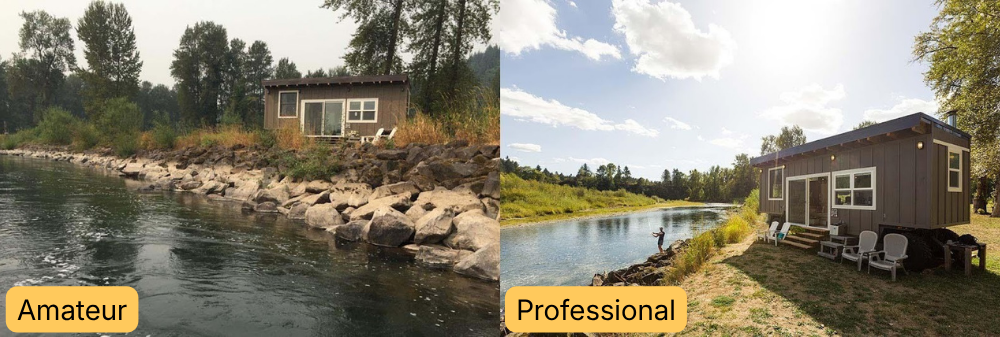
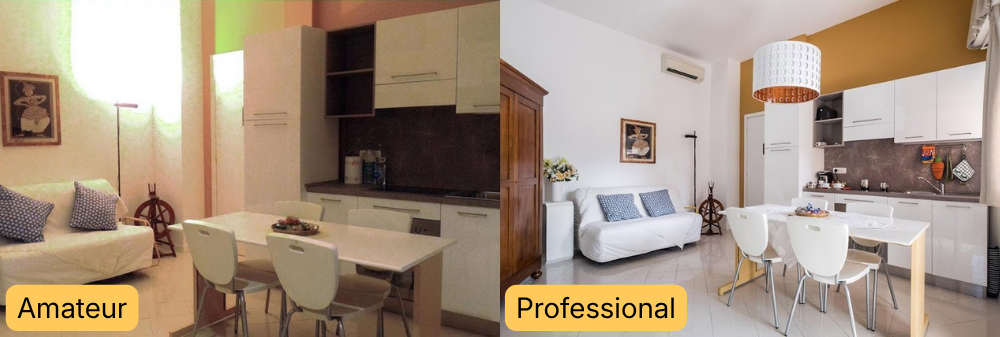
Before Professional Photos and After. Downloaded from Snappr
Scaling this, Airbnb launched a free professional photography service. Today, Airbnb photography is a genre in itself. The impact of photography is a legend in the hosting subreddit. They talk of photographs ‘supercharging’ their listing and quintupling their bookings. In 2016, researchers combined machine learning and computer vision to estimate photograph quality on Airbnb. They found that higher-quality photos increase revenue by an average of $2,455 a year. Adjusting for inflation, that is 3 lakh rupees. This is before the photographs are verified. When verified, you can add another lakh to that.
This was not all Brian and Joe got to learn through their visits.
They thought that Airbnb is easy to navigate and needs no changes. When they spoke to people using their product, they found critical limitations. A host wanted to know whether he could rent his entire apartment. Today, we know that you can rent an entire castle. This is because conversations like this one helped them gauge a need. They also saw that hosts struggled to price their listings effectively. Among other things, this led to the creation of a predictive pricing algorithm. It’s crazy how much you can get when you’re looking!
FAQs on how user research launched Airbnb
1. What was Airbnb’s approach to underperforming listings?
Founders of Airbnb conducted User Research with underperforming listings in New York City. They visited the listing, spoke to hosts and watched them use Airbnb.
2. What did Airbnb learn?
Airbnb noticed that underperforming listings were often poorly photographed.
In addition, they learned that hosts wanted to rent out their entire accommodation and struggled to price their listings effectively.
3. What did this research lead to?
Their research led Airbnb to introduce free photography and photo verification services for hosts. Additionally, Airbnb started letting people rent out entire apartments and developed a predictive pricing algorithm.
4. What was the impact?
Revenue per accommodation doubled in the first week. Researchers later estimated that higher quality photos increase revenue by an average of $2,455 a year, pre-verification. Adjusting for inflation, that is roughly ₹3 lakh. After verification, photos can increase yearly revenue by $3,285 if a room costs $100 per night.
5. Why did Airbnb struggle in its early days?
In its early days, Airbnb struggled to get bookings due to low trust and unclear listing quality. Poor photos made it difficult for users to understand what they were paying for, which discouraged them from booking.
.png)


